
The Hidden Cost of Using the Same Resume for Every Application
A generic resume feels efficient, but in a competitive market it can quietly cost you interviews. Here's why tailoring matters.
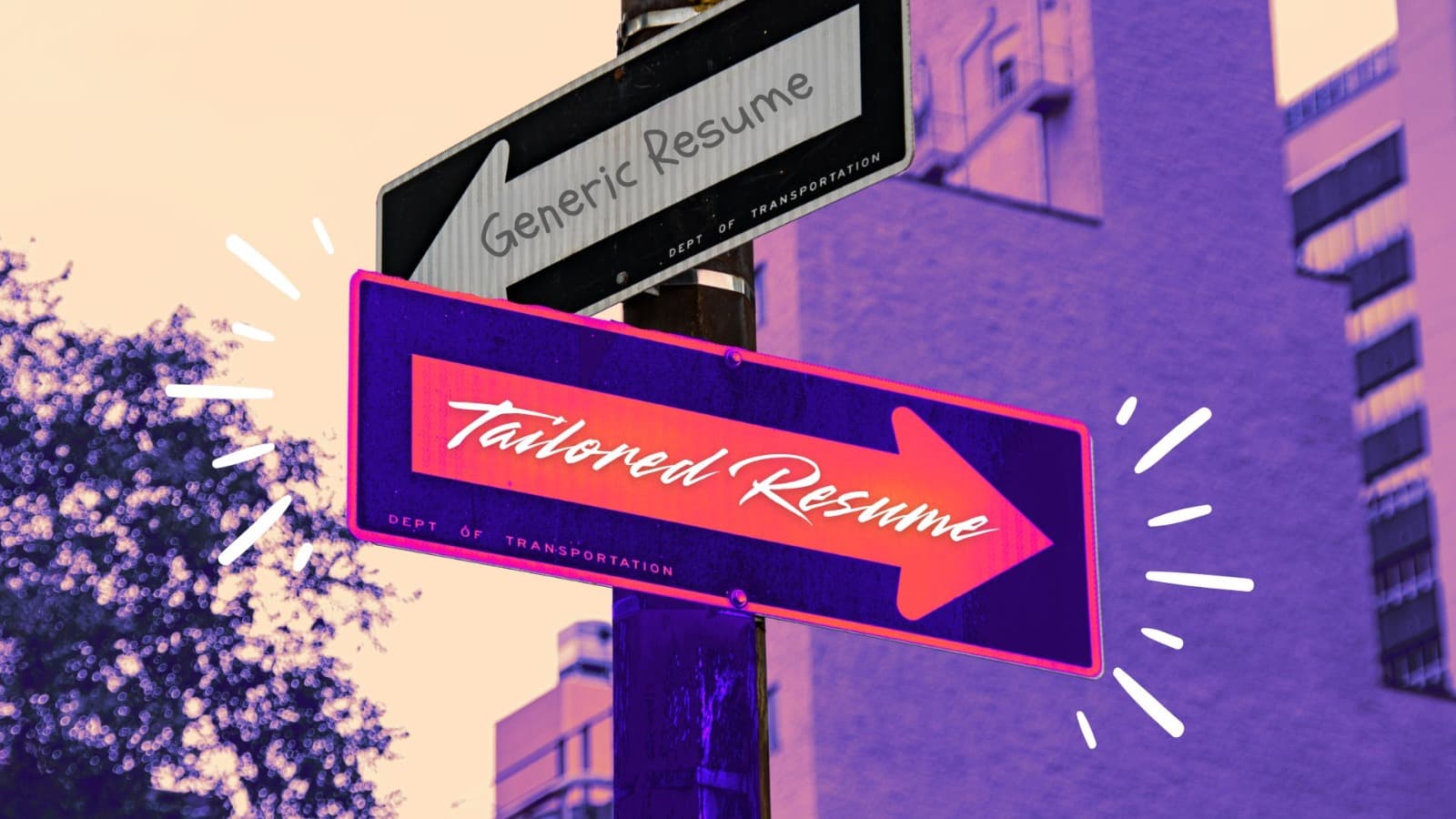
Table of contents
The Same Resume Problem
There's a version of job hunting that feels productive but isn't.
You've polished your resume. It looks good. It covers your experience, your skills and your accomplishments. So you start applying: one role, then five, then twenty. Same resume, different companies. It's efficient. It scales. And after a few weeks of solid effort, you've sent out sixty applications and heard back from almost no one.
This is one of the most common and costly patterns in modern job searching. The problem isn't your resume. The problem is that you're using one resume as if it can speak equally well to sixty different hiring decisions. It can't.
Tailoring your resume to each role isn't a nice-to-have. In the current Australian job market, it's the difference between getting interviews and wondering what you're doing wrong.
Why Sending the Same Resume Feels Like the Right Move
It's worth understanding why so many people default to the generic approach, because it genuinely feels logical.
You've invested time building a strong resume. It reflects your full career story. Why water it down or change it for every application? Isn't the point to show everything you've achieved?
Add to that the time pressure of job searching, especially when you're out of work or managing a search alongside a full-time job, and tailoring every application starts to feel like a luxury you can't afford.
But here's the catch: the time you save by not tailoring is almost always outweighed by the time you lose waiting for interviews that don't come.
What's Actually Happening on the Other Side of Your Application
To understand why tailoring matters, it helps to know what happens when your resume lands with a recruiter or hiring manager.
In a competitive market, popular roles in Australia regularly attract 200-400 applications. A recruiter managing ten open roles simultaneously might spend 20-30 seconds on an initial resume review. Some spend less.
In that window, they're not reading your resume. They're scanning it. They're asking one question: is it obvious that this person can do this specific job?
If the answer requires them to connect the dots, read between the lines or cross-reference your experience against the job description in their head, you've already lost them. They move on. Not because you're unqualified, but because your relevance wasn't immediately clear.
A tailored resume answers the question before it's even asked.
The Real Cost of a Generic Resume
A generic resume costs you visibility, relevance and connection. It may be polished, but it is not necessarily persuasive for the specific role in front of you.
Most employers, particularly larger organisations, use Applicant Tracking Systems to filter applications before a human reviewer ever sees them. If your resume doesn't include the right keywords for the specific role, it may not surface at all. The free ATS Checker lets you paste your resume and a job description to see your keyword match score instantly.
Even after passing through an ATS, your resume lands in front of a person trying to build a mental picture of you as a candidate. A resume that speaks directly to their role, team and industry creates a much stronger connection than one that reads like a general career summary.
- Missing keywords can make a qualified candidate invisible.
- Misaligned achievements make your strongest experience feel less relevant.
- Unclear relevance forces recruiters to do the work your resume should do.
- Weaker ATS performance reduces your chance of being surfaced.
- A generic summary creates less human connection with the hiring team.
Two Applicants, Very Different Results
Applicant A applies for 50 roles in a month. They use the same resume for every application, maybe swapping the job title in their summary occasionally. Their applications go out quickly. Some days they send ten in an hour.
Applicant B applies for 10 roles in the same month. For each one, they spend 20-30 minutes reviewing the job description, adjusting their resume summary, reordering their most relevant achievements and aligning their language with the role.
At the end of the month, Applicant A has sent five times as many applications. Applicant B, with one-fifth the volume, is statistically likely to secure more interviews.
Why? Because hiring is not a lottery where volume determines probability. It's a matching exercise. A tailored application that clearly demonstrates fit will outperform a generic one in almost every competitive situation.
Applicant A is investing time in applying. Applicant B is investing time in being selected.
Common Tailoring Mistakes to Avoid
Tailoring your resume is genuinely valuable, but there are wrong ways to do it.
The goal is to make your experience more relevant and easier to understand. It is not to overload the page with keywords or copy the job ad back to the employer.
- Keyword stuffing: using terms from the job description even when they are not accurate or natural.
- Rewriting everything: creating a new resume from scratch for every application.
- Copying the job ad: mirroring the wording so closely that your resume feels hollow.
- Using AI without review: accepting output that is inaccurate, generic or unlike your real voice.
A Better Approach to Resume Tailoring
Effective tailoring doesn't require starting from scratch every time. It means making targeted adjustments that help a recruiter quickly understand why you fit this specific role.
- Start with a master resume that includes your full work history, achievements, skills, certifications and education.
- Tailor the summary first because it is often the first thing a recruiter reads.
- Reorder your achievements so the most relevant examples appear early.
- Align your language with the job description where it accurately reflects your experience.
- Trim details that do not serve the application.
How AI Can Accelerate the Tailoring Process
Used well, AI is genuinely useful for resume tailoring, not because it does the thinking for you, but because it reduces the friction of the process.
AI tools can help identify which keywords and phrases from a job description are missing from your resume. They can suggest ways to reframe an achievement to better match what a role is looking for. They can help tighten language that's too vague or too task-focused.
The key is staying in the driver's seat. Use AI to speed up and improve your tailoring process, but always review the output with your own judgement and make sure the final version sounds like you.
Your 5-Step Resume Tailoring Action Plan
If you want to start tailoring more effectively right now, use this simple process on your next application.
- Read the job description carefully and identify the two or three outcomes the role is expected to deliver.
- Pull out your master resume and choose the achievements most relevant to this role.
- Rewrite your summary in two to three sentences for this employer and role.
- Reorder and adjust your experience so the strongest relevant examples come first.
- Do a final relevance check from the recruiter's point of view.
Staying Organised Across Multiple Applications
One challenge of tailoring is keeping track of which version of your resume you've sent to which employer. If you're managing ten active applications across different roles and industries, it's easy to lose track.
This is where having a proper system matters. Koalapply is built for exactly this kind of organised, strategic job search. It helps you tailor resumes to specific roles, track every application across your pipeline and manage the full process from first application to final offer.
If you're serious about your job search, a career command centre beats a spreadsheet every time.
Frequently Asked Questions
How much should I tailor my resume for each job application? You don't need to rewrite your entire resume for every role. Focus on the sections with the highest impact: your professional summary, your top achievements and the language you use to describe your skills and experience.
Should every application have a different resume? Yes, but not a completely different one. Start with a strong master resume and make deliberate adjustments for each role.
Do ATS systems really matter for Australian job seekers? Yes. Most medium-to-large Australian employers use some form of ATS to manage application volumes. Relevant keywords, clean formatting and aligned language all help.
Can AI tailor resumes effectively? AI can help identify keyword gaps, improve language and speed up adjustments. It works best as a support tool, not a replacement for your own judgement.
How do I keep track of different resume versions across multiple applications? A dedicated job search management tool makes it easier to track which version you sent, to whom and when.